CEO
Mel Stevenson
Mel Stevenson is a petrochemical industry veteran with deep business-development experience across industrial markets. He leads MLS with a commercial focus on building a credible domestic chelant business, not just a lab concept.
Alkaline soils (pH 7.5–8.5) across Central and West Texas lock out essential micronutrients — iron, zinc, manganese, copper — before roots can absorb them. The conventional answer has always been “apply more fertilizer”. But now farmers face a double bind: 70% of farmers can’t even afford to acquire what they need and foreign supply chains are crumbling. Even worse, soil science shows that they’d still be throwing their money away. The system is broken at both ends.
Stat callout
Over 60% of Texas agricultural soil is too alkaline for conventional micronutrient delivery
pH range
Locked out
Iron, zinc, manganese, and copper availability falls as pH rises across Central and West Texas.
Next
What if the solution to the problem already exists?
The solution does exist, and it's known in organic chemistry as Chelation.
A chelant wraps around a metal ion like a molecular cage, keeping it soluble and plant-available even in alkaline conditions where conventional micronutrients fail.
What chelation does
It holds the metal in solution instead of letting it precipitate in high-pH soil.
Field implication
More of the micronutrient stays available long enough for the plant to actually take it up.
Fe
45M
Iron
45 million times more soluble
scale: millions
Cu
79M
Copper
79 million times more soluble
scale: millions
Zn
4.1K
Zinc
4,100 times more soluble
scale: thousands
Mn
178x
Manganese
178 times more soluble
scale: hundreds
Why the spread is so extreme
Chelants prevent metals from tying up with hydroxides and carbonates, so the nutrient remains soluble across the pH range where Texas soils usually shut the door.
Next
The science works. Now someone has to build it.
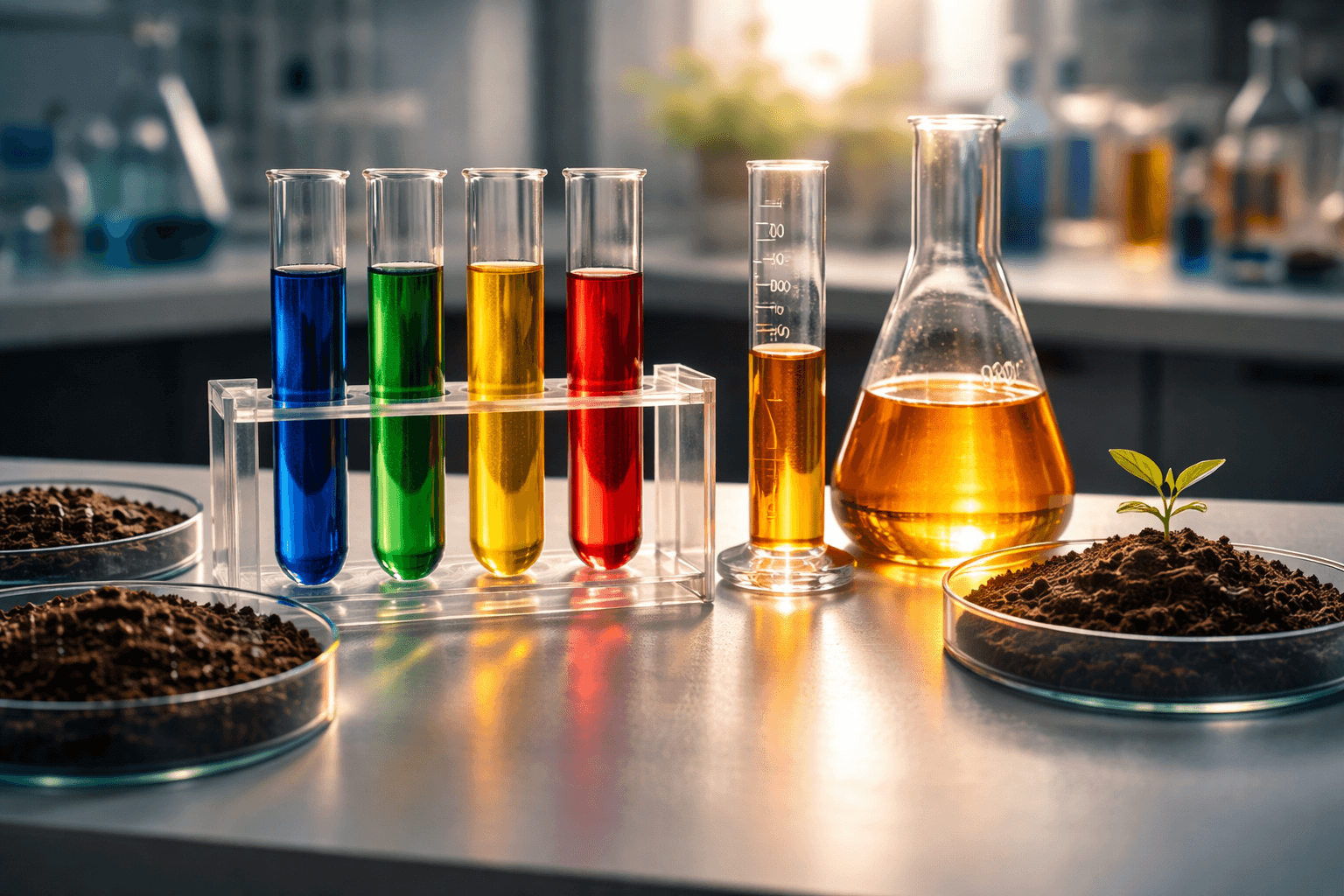
MLS holds six cutting-edge inventions across chelation chemistry, and the company's first market focus is liquid chelant formulations for agricultural application.
Six cutting-edge inventions spanning chelation chemistry.
Current focus is liquid chelant formulations built for agricultural application.
Organic-compatible inputs that align with modern soil and crop programs.
GRAS-certified ingredients selected for safe, scalable formulation.
Fully biodegradable chemistry designed for field use without persistence.
Market entry
Iron chelant comes first because demand is largest. So is the value proposition.
Format
Liquid chelant formulations
Ingredients
GRAS-certified
Compatibility
Organic-compatible
End of life
Fully biodegradable
Capability statement
This is not a catalog of SKUs. It is a chemistry platform built to turn proven chelation IP into field-ready formulations that solve a defined agricultural problem.
Next
But where it comes from matters as much as what it does.
Today, roughly 70-80% of global chelants are imported from China, Brazil, and Sweden. MLS is building a domestic, tariff-proof supply chain that turns industrial byproducts into agricultural inputs, creating landfill diversion, carbon credit potential, and a chelant made in Texas, for Texas.
Global supply today
70-80%
Imported from China, Brazil, and Sweden
MLS thesis
Domestic
Tariff-proof chelant manufacturing in Texas
Circular upside
2x
Landfill diversion plus carbon credit potential
Bigger picture
Circular chemistry means the same ton of industrial byproduct can create climate value, avoid disposal, and feed a field instead of a landfill.

Waste stream
Industrial byproducts
→Existing material streams are diverted before they become landfill burden.
Processing
Domestic conversion
→MLS processes those feedstocks in-state into dependable chelant chemistry.
Chelant
Tariff-proof supply
→Domestic production reduces exposure to imported supply volatility.
Field
Agricultural input
The output returns to Texas agriculture as a usable micronutrient delivery tool.
Texas advantage
When the feedstock, processing, and end market stay domestic, the result is a more resilient chelant supply chain built in Texas for Texas growers.
Next
And it doesn't stop at soil.
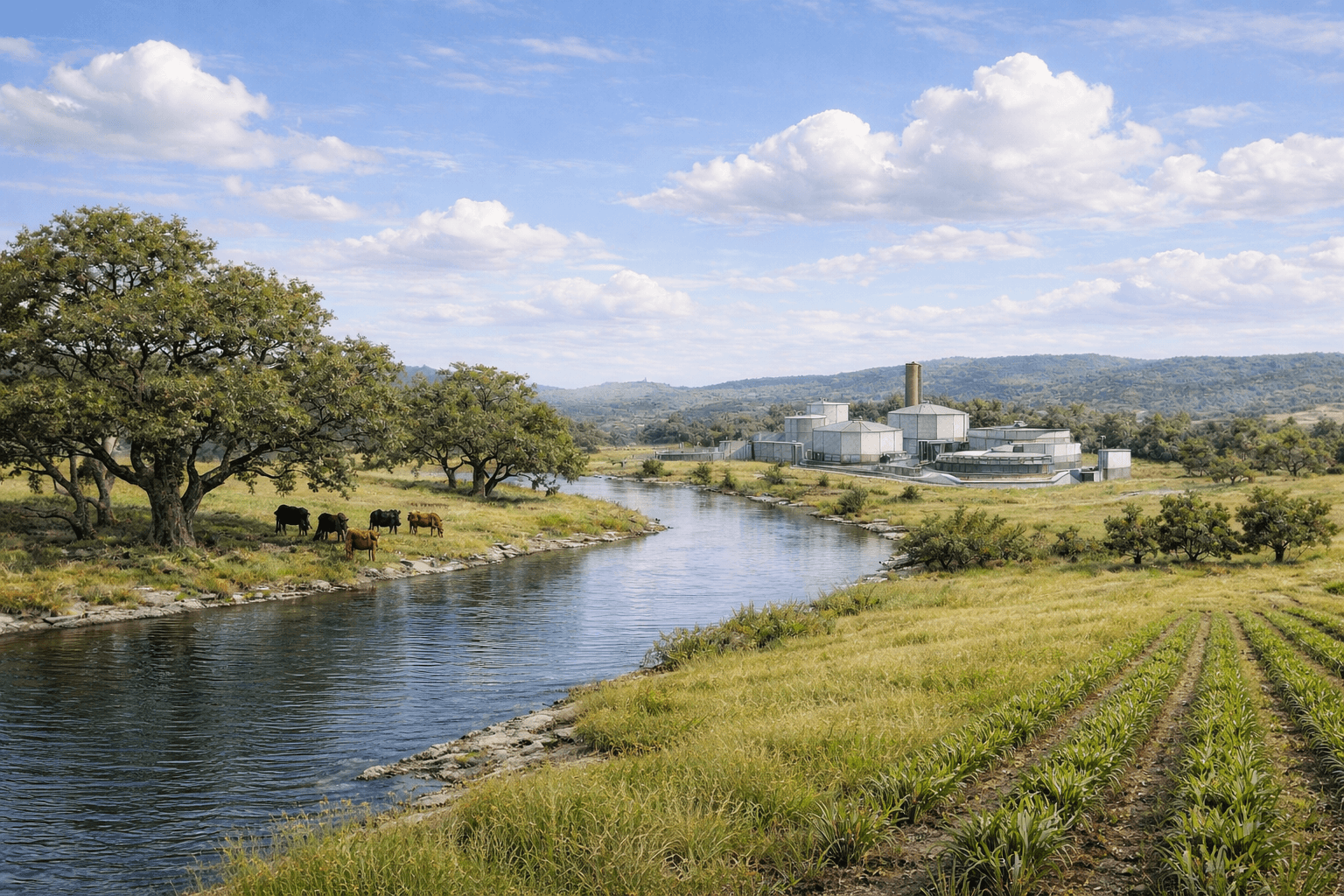
Beyond agriculture, the same chemistry points toward water systems under pressure: phosphate runoff control in waterways, animal waste management applications, and treatment workflows designed to conserve more freshwater before scarcity becomes crisis.
Adjacent application
Phosphate runoff control
Chelation can help keep phosphorus and metals from moving unchecked into waterways, supporting cleaner reservoirs, rivers, and irrigation systems.
Adjacent application
Animal waste management
The same chemistry has relevance in manure and waste-stream handling, where nutrient capture and more stable processing can reduce downstream burden.
Adjacent application
Water treatment and conservation
That opens a path into treatment systems that recover usable water, protect freshwater supplies, and make more of every gallon already in the system.
Texas context
Texas has now designated water infrastructure as an emergency priority, with $1 billion per year aimed at new supply and repairing existing systems.
Texas water funding
$1B/yr
Dedicated annually through House Joint Resolution 7 for water supply and infrastructure projects.
Water loss strategy
320Kac-ft
Of 2070 municipal conservation strategies in the 2022 State Water Plan, this share is tied to water loss reduction.
Planning horizon
50 years
TWDB planning is built around long-range drought resilience and future supply needs across Texas.
TCEQ
Water quality, permitting, and pollution control
The Texas Commission on Environmental Quality oversees surface-water standards, wastewater and stormwater permitting, and nonpoint-source pollution programs.
TWDB
Water planning, finance, and conservation
The Texas Water Development Board leads long-range state water planning and finances infrastructure, wastewater, and conservation projects.
Next
It starts with two people who've spent decades on this.
MLS BioChelants is led by commercial and technical operators who understand what it takes to move chelation chemistry from product portfolio to market-ready business.
CEO
Mel Stevenson is a petrochemical industry veteran with deep business-development experience across industrial markets. He leads MLS with a commercial focus on building a credible domestic chelant business, not just a lab concept.
CTO
Deepak 'Doc' Patil is a master chemist whose work in chelation has produced six patents in the category. He gives MLS the technical depth to translate protected chemistry into scalable formulations and defensible performance.

MLS is a proud Go Texan partner, reinforcing the company's identity as a Texas-built business serving Texas markets.

Commercial side
Petrochemical market experience paired with disciplined business development.
Technical side
Decades of chelation R&D expertise grounded in formulation and scale-up.
Why this matters
MLS combines market execution with chemistry depth, which gives the company more credibility than a typical early-stage materials story.
Next
When the story is compelling, the next step is a direct conversation.
General & Business Inquiries
Technical & Chemistry

Conclusion